
Reaching the Animal's Abilities
You've probably heard sayings like "an elephant never forgets" or "these animals are so smart." But if we only believe those two things, are we actually doing enough to reach their mental capabilities especially in our care?
I've worked with many different species and observed behaviours that were incredible to watch. These moments kept confirming to me that we might not be doing enough to reach the animals' minds.
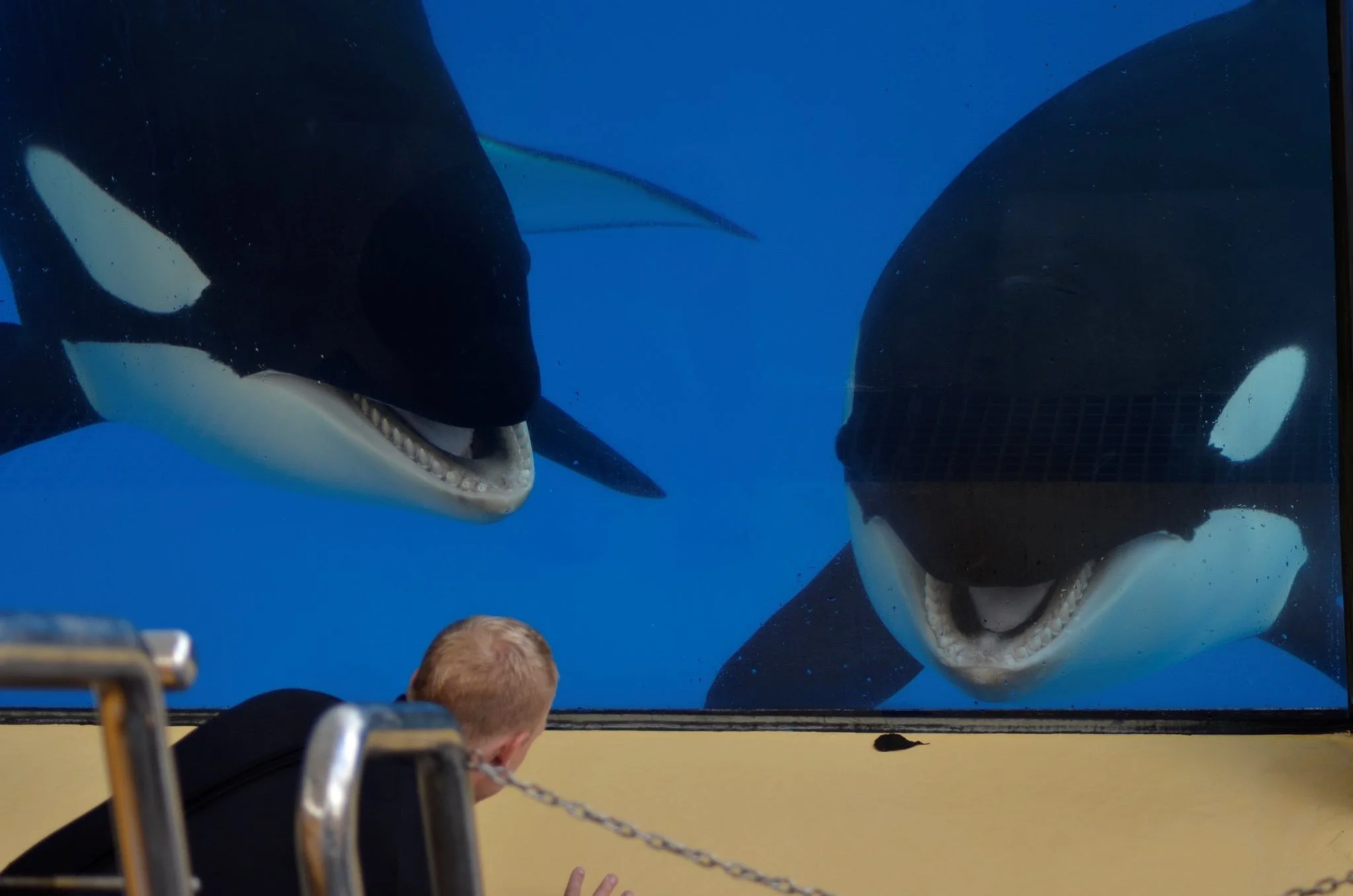
Playing Orca’s
One day, while cleaning the facility and preparing for our next training session, we observed something I had never seen before. The facility had a pool system of four pools in total. One back pool and the show pool were accessible for the group of orcas. The middle section was the stage, accessible only for trainers, which we reached by crossing a small bridge.
We always watched the animals before starting a session, because we knew we could accidentally reinforce behaviour just by approaching. That's when we saw it one orca in one pool, the other orca in the other pool. They had access to each other and the rest of the group if they wanted it. But what they were doing baffled us.
They had found a tiny little rock. One orca would take the rock at the front of their rostrum, curl their tongue, and flick it across the two-metre slide-out area that was part of the stage. The other would try to catch it and then flick it back.
A beautiful game they had invented themselves. You see this with other animals too, where they create their own games. It's a form of bonding, I'd say.
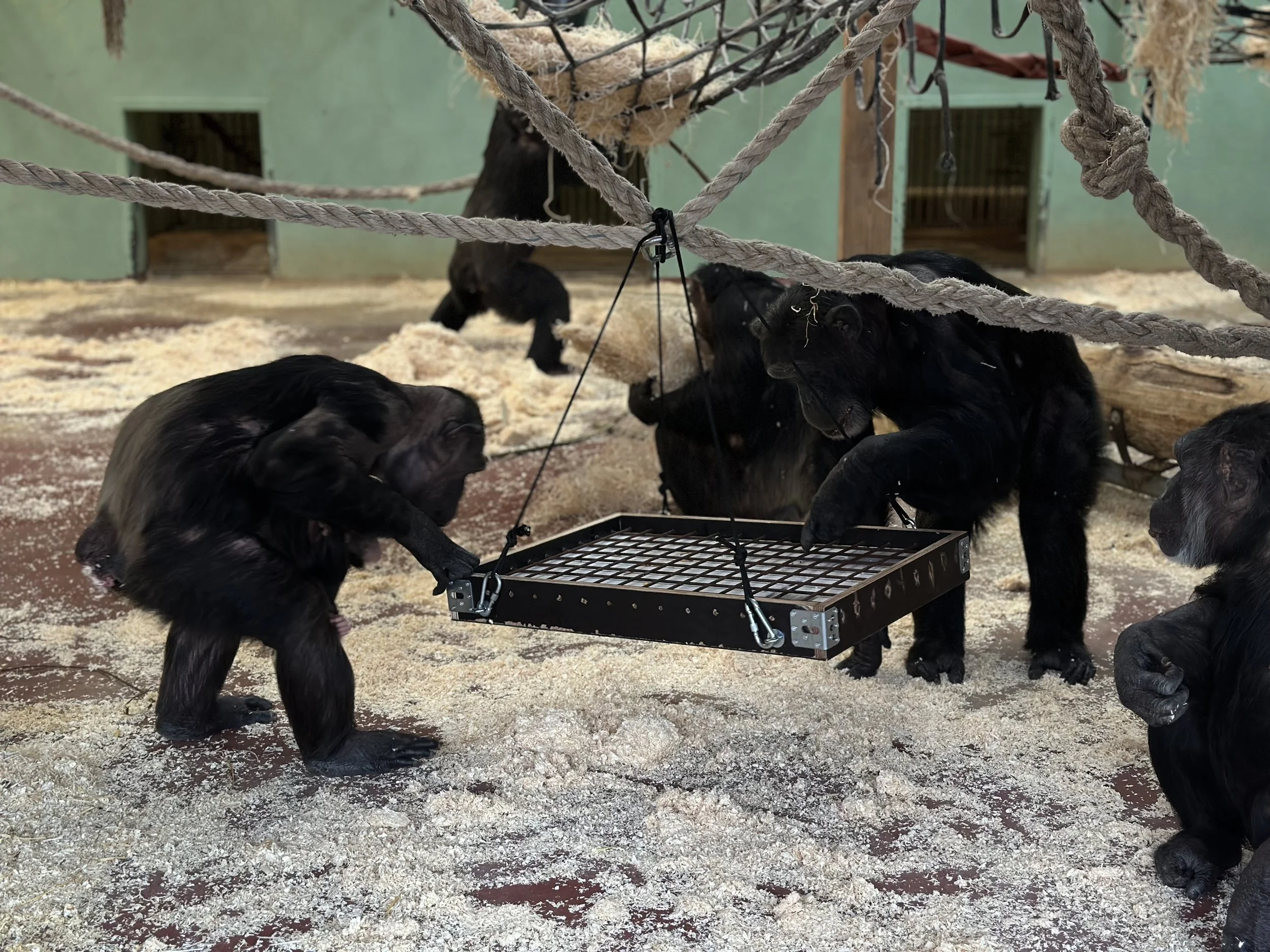
Sliding Tile Puzzle
At another facility, where I was the behaviour coordinator, another interesting moment happened. The keepers gave me a drawing of a puzzle they wanted built. I enjoy building things, so I decided to give it a go. It was designed for chimpanzees which immediately meant I had to make it sturdy.
The puzzle wasn't a simple one; it was a sliding tile puzzle. After we put it in place and gave the animals access, you could see the immediate interest. What stayed with me was how they helped one another to solve this new device together.
These experiences help me understand more and more how animals think and what we need to do to truly take care of them.
Frans de Waal said it best: "Are we smart enough to know how smart animals are?" If you haven't read that book, please do. Because I don't think we are. Within animal behaviour, there is still so much to learn.
Dare to Change
In recent years I had the privilege of helping build a cognitive program at a well-respected facility, SeaWorld Australia. Now, we're not necessarily talking about animal training as a cognitive program and that's exactly my point. I don't think we should get comfortable with the assumption that we already are. I'm talking about deeper intelligence, and that is exactly what they were working on at this facility.
Let me put it a different way. Giving children toys helps their ability to problem-solve and create new games. Now imagine I only ever give them Duplo blocks. At first, because of the novelty, it's a great game we'd say their cognitive ability is being enriched. As the child grows, that game slowly gets boring, either because of its simplicity, or because the child simply gets smarter. But I keep giving Duplo because of its cognitive intent. Over time, the child plays with it for one minute, hits the ceiling of what it offers, and moves on. The cognitive value of the Duplo didn't decrease but the child outgrew it.
Now go back to animals. I believe something very similar happens in our facilities. We keep giving animals the same enrichment devices for their entire lives and somehow expect something different. We don't stop to think about what the animals are actually capable of. That's why at SeaWorld we started building a program focused on increasing and reaching the animals' psychological capabilities and it had great success.
Is it to Easy?
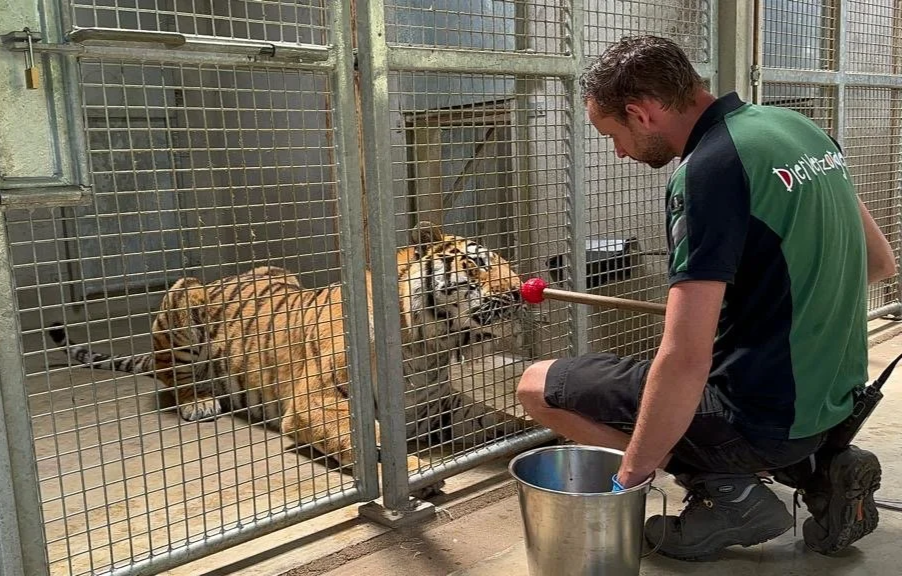
Is it to Easy?
The same applies to training. Training should be cognitively engaging on its own and don't get me wrong, it can be. But at the end of the day, aren't we often just asking for an approximation and reinforcing it? We ask for a target behaviour five times the same way and deliver a preferred reinforcer. The game of training can be made genuinely fun, but it is often made repetitive by the trainer especially when we convince ourselves that giving a reinforcer is enough for the animal to have a good time. I'm sorry, but that's not how it works. I think we're becoming too comfortable with the statement that animal training is inherently cognitive. That's too easy a claim to make, because there's more to it. As I mentioned, we often take something that should be fun and mentally stimulating for the animal and make it routine. And the moment it becomes routine, it stops being truly cognitive.
I'm not saying stop training your animals, or that training is bad for their psychological well-being. I'm saying that what we're doing might not be enough to actually trigger their cognitive abilities.
Increase Welfare
While working alongside some of the trainers I consider the best in the region, they shared stories very similar to the orca story. They had the same questions about what we're actually offering these animals. If we say an elephant never forgets, shouldn't we enrich that ability with games that ask the elephant to remember what was requested? If the sea lion is a group animal that depends on its group to survive, how can we teach teamwork in a way that actually builds on that ability?
We can teach "do what the other animal does" which requires animals to observe one another, strengthening the observational learning that is essential in social groups. We can teach "pay attention to my cues," and when I give the go-signal, you perform the asked behaviour. From there, we can extend the time between the cue and the go-signal. That teaches memory which is exactly what an elephant's natural ability is built around.
From enrichment to training, behaviour management is not easy. It's complex, and it all starts with understanding the natural, species-specific needs of the animals in our care. From there, we rely on our creativity to reach those goals. Teaching hyenas to locate specific scents, drawing on their extraordinary olfactory capability. Teaching an elephant to copy something it has never done before. Designing enrichment that gradually becomes more complex by adding layers of tasks the way researchers do with ravens or keas.
There are plenty more games we can teach. But the whole point I'm making in this article is this: are we enriching the animals' capabilities the way we should be or are we still handing Duplo to adults?
If you want to learn more about this topic, join our membership program at zoospensefull.com.