
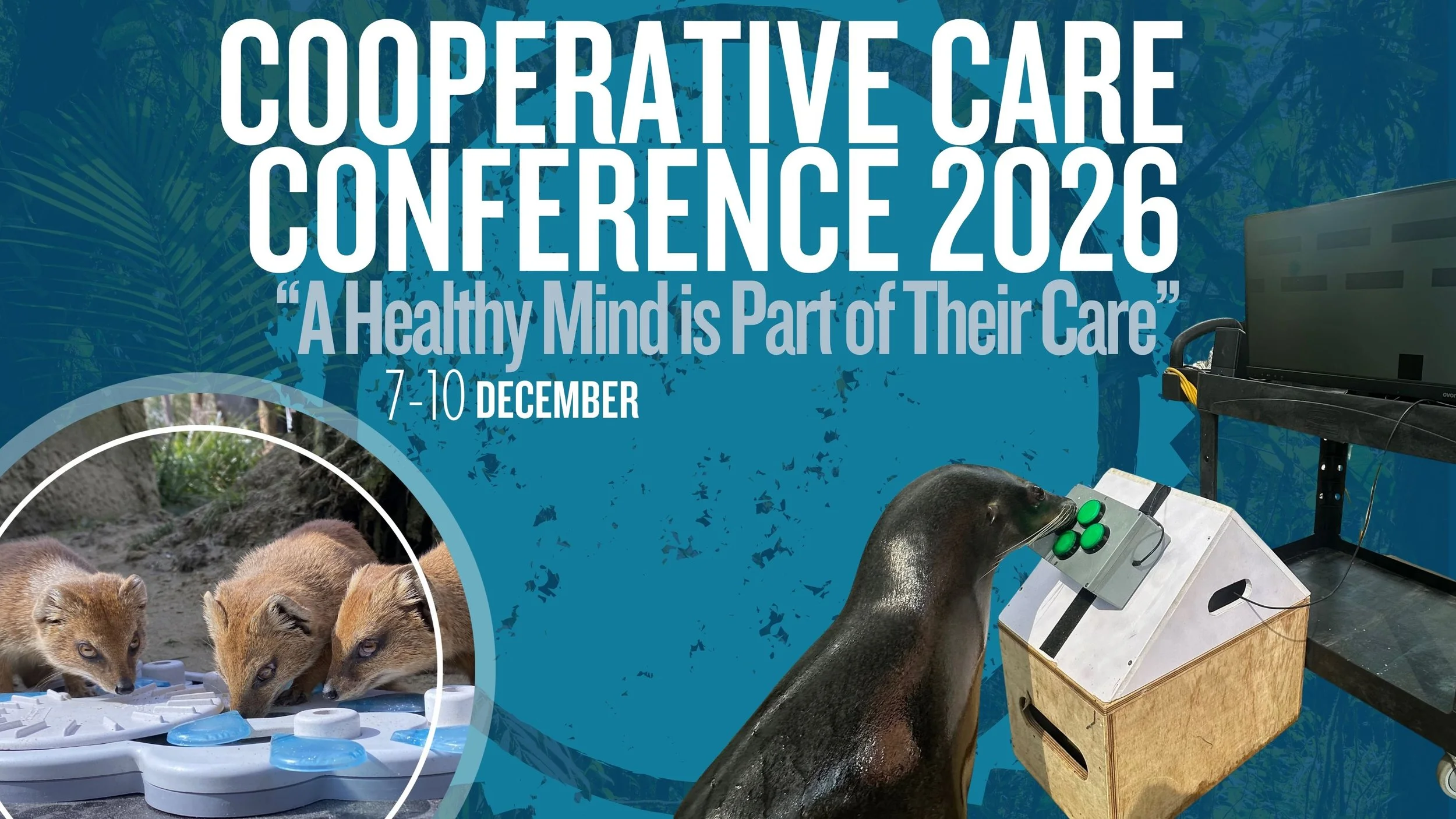
From Consent to Hoof care to Deeper Cognition
A Different Kind of Conference
This year, we’re doing things differently.
There will be a schedule and structure for each conference day, but instead of treating every topic as a separate piece, we’ll create a journey that builds and develops as the days unfold.
We’ll start with what you already know and love from us: practical behaviours that strengthen cooperative care.
From there, we’ll take you deeper.
Throughout the conference, we’ll connect practical training with welfare, emotional well-being, and a deeper understanding of cognition. We’ll explore not only what our animals do, but why they do it, and how we can shape our training to better meet their individual mental and emotional needs.
Day by day, layer by layer, we’ll move from behaviour to understanding, and from understanding to truly meaningful training.
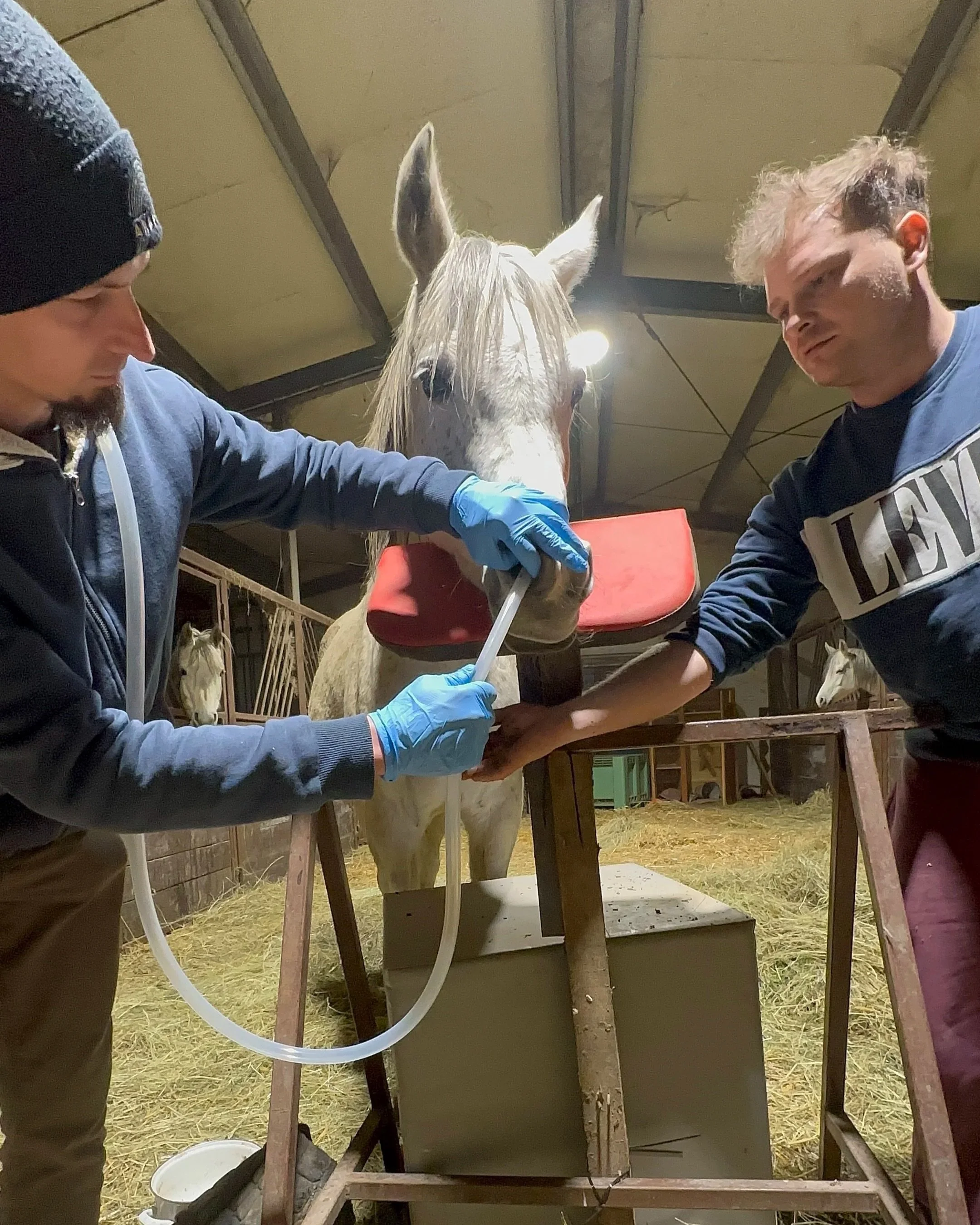
Come ready to learn, question, explore, and discover a new perspective on cooperative care.

A Healthy Mind is Part of Their Care
This year, we're taking the conversation even further by focusing on the psychological well-being of the animals in our care.
We've carefully selected speakers who will share how they develop their animal programmes by offering choice and allowing animals to express their preferences, creating meaningful enrichment, and designing games that encourage animals to think, explore, and problem-solve. Their stories will demonstrate how giving animals a voice and the opportunity to communicate their preferences can transform training, husbandry, and overall welfare.
By exploring these approaches across different species, we hope to inspire new ideas and encourage meaningful discussions about creating environments where animals can truly thrive.
The Story: Behind The Cooperative Care Conference
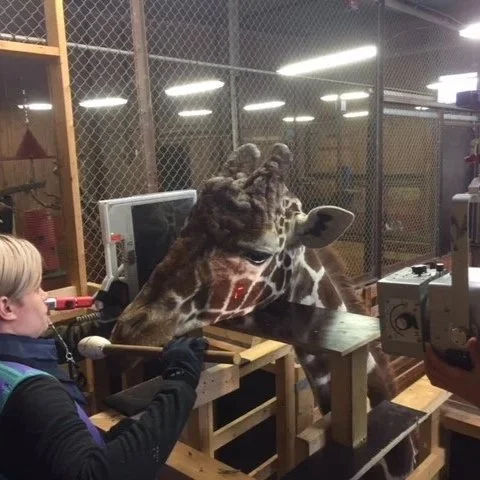
In 2020, we had an idea. In 2021, we brought it to life.
Our journey began with a simple goal: to create a place where people could come together to share knowledge about cooperative care, not from just one discipline or training culture, but from many.
Over the years, we’ve had the privilege of working with a wide range of species. And along the way, we discovered something remarkable: the most important lessons weren’t necessarily about the species themselves. They were about the science of behaviour.
Whether you’re working with horses, dogs, elephants, birds, marine mammals, or any other animal, the underlying principles of learning and behaviour remain remarkably similar.
As we explored the field, we began to see a gap. Training communities often worked within their own disciplines, with limited opportunities to learn from one another. Yet across those boundaries was an incredible wealth of knowledge, experience, and ideas waiting to be shared.
We realised that bringing these perspectives together could change the way we think about training, learning, and cooperative care.
And that’s when everything changed.
For years, we’ve believed that animal training can be united through the science of behaviour, understood, shared, and applied across species.
Our vision has always been simple: when we learn from one another, we can continue to improve the welfare of the animals in our care.
We do this by sharing our ideas, skills, experiences, and creative thinking. Because whether we work with a dog, cat, horse, tiger, chimpanzee, dolphin, or any other species, the process of learning is grounded in the same fundamental principles of behaviour.
That belief is what inspired us to create the Cooperative Care Conference.
A place where trainers from the horse world, dog world, elephant world, bird world, marine mammal world, and beyond can come together to exchange knowledge, challenge ideas, inspire one another, and advance the practice of cooperative care across species.
Because when we stop thinking in terms of species and start thinking in terms of behaviour, new possibilities emerge.
We create better training.
We create better welfare.
And we create a stronger future for the animals in our care.
A future where animals aren’t simply trained to participate—they are empowered to participate.
That’s when our animals will truly thrive.