
Behaviour Programs; Keep it Simple
After a workshop we held in the United Kingdom, we discovered two interesting challenges in animal training. Both made us reflect on how we build our training programs and how animals understand what we ask of them.
The first challenge was the idea that training only happens during a dedicated training session. In other words, we focus on behaviour when we are training, but we often forget about it when we are not.
The second challenge was the number of signals we use during training. As we develop training programs, we create a language between ourselves and the animals in our care. But how often do we stop and ask ourselves: “What tells us that the animal actually understands what we are communicating?”
Something I considered normal in my own work turned out to be unfamiliar to many workshop participants. When I reflected on other projects I had worked on, I realised that this is a common challenge in many animal facilities and even in our homes.
Let’s take a closer look at these two topics and explore how simple, easy-to-understand training programs can improve animal welfare without requiring additional costs.
1. Training Happens Beyond Training Sessions
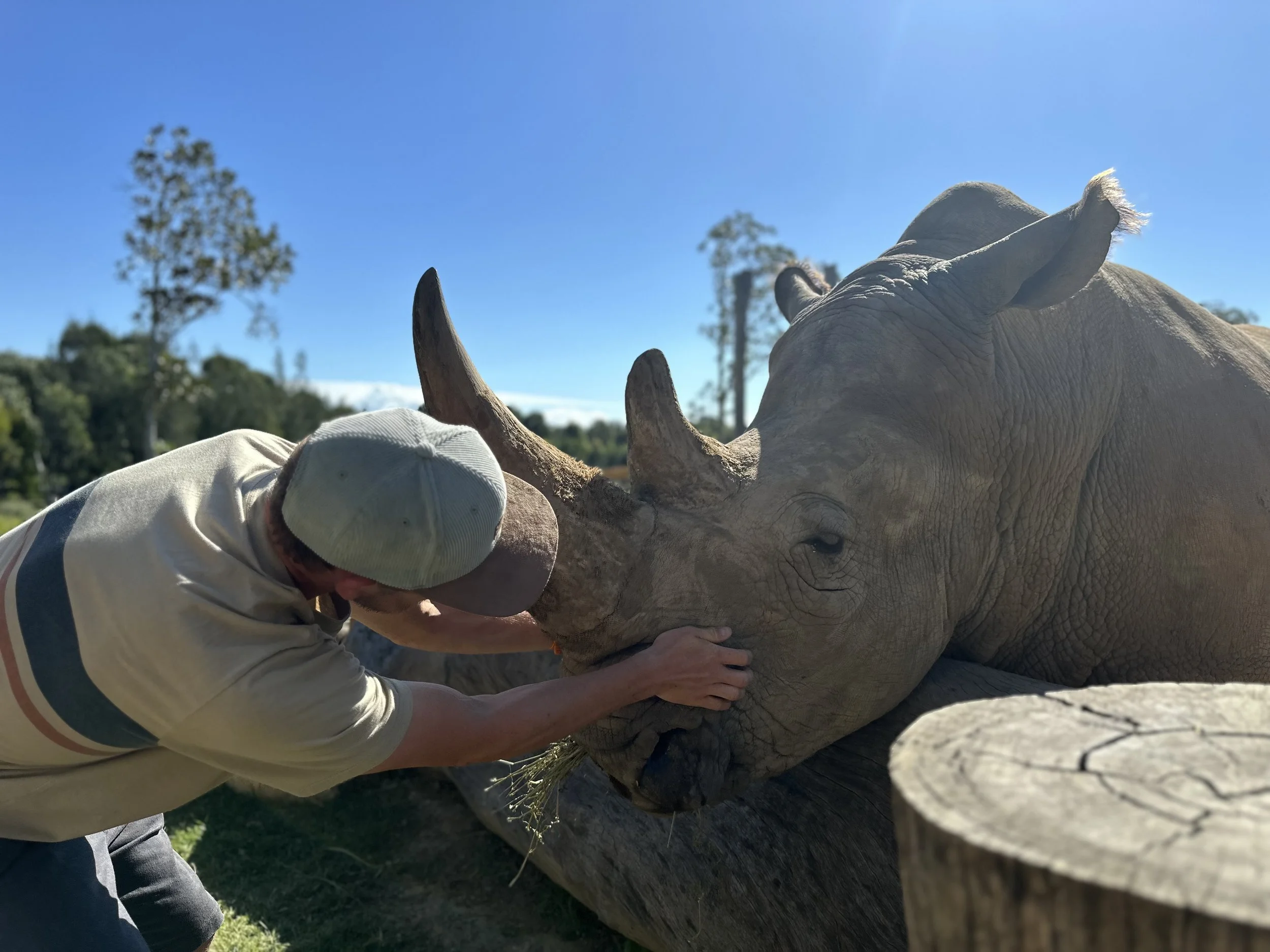
Animal training is about much more than teaching a behaviour such as opening the mouth, jumping, or lying down. It is also about how we manage behaviour throughout the day.
Perhaps behaviour management is a better way to describe it.
Training is not limited to the moments when we pick up a target stick or clicker and start a session. Every interaction we have with an animal can influence its behaviour. This is something we often forget.
We sometimes act as though the rules of training only apply during a formal session. But successful training requires consistency in how we interact with animals throughout the day. So, what does this look like in practice?
Every interaction matters
Imagine that you need to move an animal from one area to another, but you discover that the animal is already in the area where you want it to be. Often, we simply close the gate and walk away. The job is done, right?
But we can do better.
Instead, we could call the animal towards us while it is in the correct area, close the gate, and reinforce it. Alternatively, we could close the gate first and then provide reinforcement.
These are small changes, but they help us build a more consistent training system.
The same principle applies when we provide enrichment. When we give an animal something it enjoys, we may reinforce whatever behaviour it was doing at that moment. This means we should pay attention to the animal before introducing enrichment.
Is the animal foraging, playing, grooming, or engaging in another behaviour we want to encourage? If so, providing enrichment at that moment can help strengthen that behaviour.
However, if the animal is displaying a behaviour we want to reduce, we should think carefully about whether providing enrichment at that moment could reinforce it.
The same applies when we give animals access to a cleaned area, introduce a new enrichment device, or allow them to interact with their companions. What we provide, and when we provide it, can influence what an animal does next.
If we repeatedly provide access or enrichment immediately after an unwanted repetitive behaviour, we may unintentionally strengthen that behaviour instead of reducing it.
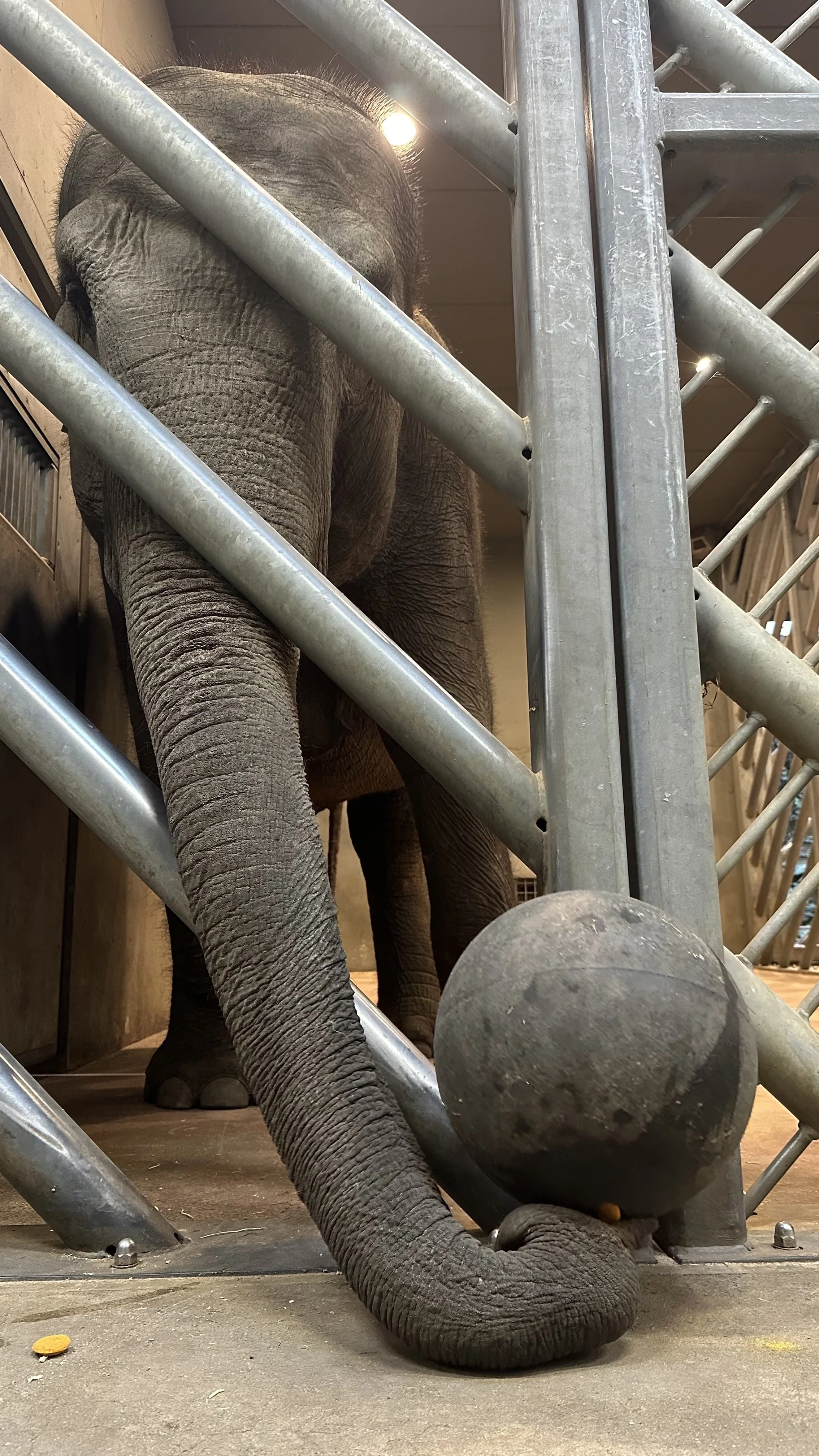
A practical example: The elephant at the gate
I once visited a facility with elephants. One elephant repeatedly tapped her trunk against a gate. The sound was annoying to the keepers, and we assumed she wanted the gate to open. But the truth was that we didn't know why she was doing it.
The head keeper eventually arrived with some enrichment, threw it to the elephant, and said something along the lines of, “Great, the tapping has stopped. That sound was so annoying!”
From the keeper's perspective, the problem was solved. The tapping stopped, and the elephant had something else to do.But from a training perspective, we need to consider what happened just before the enrichment was provided.
The elephant tapped the gate, and then the keeper delivered something enjoyable. If this pattern happens repeatedly, the elephant may learn that tapping the gate leads to enrichment. In other words, we may unintentionally reinforce the very behaviour we wanted to stop.
Of course, we cannot know the elephant's motivation from this observation alone. She may have been communicating something, responding to the environment, or engaging in another behaviour. We need to investigate the reason for the behaviour rather than simply assume we know what it means.
This example highlights an important principle: we need to consider the consequences of our actions, not just our intentions.
Animal Training is more than a clicker and a target stick
Animal training doesn't begin and end with the equipment we use during a session. It includes the everyday interactions, routines, and decisions that shape behaviour. When we separate formal training from the rest of the animal's day, we risk creating an inconsistent system. This can make learning more difficult, increase frustration, and contribute to unwanted behaviours.
A successful training program needs to consider the whole picture.
That is why I often say: “It's all or nothing.”
This doesn't mean that every interaction must become a formal training session. It means that we need to understand how our everyday actions affect behaviour and make sure they support the goals of our training program.
2. Keep Training Sessions Simple
Over the years, we have worked with many different trainers, from dog and horse trainers to elephant and dolphin trainers. We have also developed training programs for birds of prey, reptiles, and hoofstock.
Across these different species and training environments, we repeatedly encounter the same challenge: we often use more signals than we actually need.
These signals are meant to help animals understand us. But have we ever stopped to ask whether they really do?
Let's look at two common examples.
The bridge or marker signal
A bridge, or marker signal, tells an animal that it has met the training criterion and that reinforcement is available.
For example, imagine that we ask an animal to lie down. The animal lies down, and we click, whistle, or use another marker signal. In a simple training system, this signal marks the correct behaviour and indicates that reinforcement is coming. The animal can then leave the position to receive its reinforcement. This is often called a terminal bridge because it marks the end of the requested behaviour.
However, some training systems ask the animal to remain in the behaviour while receiving reinforcement. Others introduce a separate release cue or recall signal to tell the animal when to stop.
Different approaches can work, depending on the training goals. The important thing is to make sure that the signals have clear, consistent meanings. If our marker already signals the end of the behaviour, do we really need additional signals to communicate the same thing? Sometimes we do, but often we don't.
Every additional signal creates another piece of information for the animal to learn. If that information isn't necessary, we may be making the system more complicated than it needs to be.
The keep on going signal
Another common signal is the keep on going signal, sometimes called a continuation cue. This signal tells the animal something like: “You're doing well. Keep doing what you're doing.”
For example, if we ask an animal to lie down and want it to remain there, we might use a keep-going signal to indicate that the behaviour should continue. This can be useful in some training programs. In others, it may not be necessary.
The challenge arises when the keep-going signal and the marker signal are used inconsistently or have overlapping meanings. Imagine being asked to lie down. You lie down, and the trainer gives you a signal. Should you stand up because the task is finished, or should you stay down because you're being asked to continue?
If the signals aren't clear, how are you supposed to know?
The same confusion can happen for animals. When signals have unclear or conflicting meanings, learning can become more difficult and frustration may increase. The solution is not necessarily to remove every signal. Instead, we should carefully consider which signals are genuinely useful and ensure that each one has a clear purpose.
Every signal we introduce should make communication clearer, not more complicated.
3. How Do We Know an Animal Understands Us?
This is one of the most important questions we can ask when developing a training program. We might believe that we are communicating clearly because we understand the signals we use. But that doesn't automatically mean the animal understands them in the same way. We need to look at the animal's behaviour.
For example, if we ask an animal to lie down and it responds by lying down, that gives us evidence that it understands the cue in that context. But what about our other signals?
If we use a keep-going signal, what behaviour tells us that the animal understands it means to continue? If we use a terminal bridge, what tells us that the animal understands the requested behaviour is finished? These questions help us evaluate whether our communication system is working as intended.
We shouldn't simply assume that an animal understands a signal because we have taught it, used it repeatedly, or attached a specific meaning to it in our minds. Instead, we should observe the animal's responses and assess whether the signals are producing the intended outcome. We also need to consider the context. One response does not necessarily prove complete understanding, but consistent responses in the appropriate situations can help us build confidence that our communication is clear.
Ultimately, our goal is to create a shared language that is predictable and easy for the animal to learn.
Simplicity Improves Animal Welfare
When we develop a training program, it is easy to focus on the tools, signals, and techniques we can add. But perhaps we should start by asking a different question:
“What can we remove to make this system easier to understand?”
Do we really need that extra signal? Are we being consistent in our everyday interactions? Are we reinforcing the behaviours we actually want to encourage? And can we clearly identify how the animal responds to our communication? These questions can help us simplify our programs without spending additional money or introducing more equipment.
A simpler system can make communication more predictable, reduce unnecessary confusion, and help us respond more consistently to the animals in our care. Most importantly, it encourages us to look beyond individual training sessions and consider the animal's entire daily experience.
Animal training is about building a relationship through clear communication. The more consistent and understandable that communication becomes, the better we can support learning, behaviour, and welfare.
Keep it simple. Look at the whole picture. And always ask yourself: does the animal understand what I'm trying to communicate?
Because sometimes, improving animal welfare doesn't require adding more to our training system. It simply requires us to make better use of what we already have.