
Trick or Treat: The Gating Game
Animal welfare is a big topic these days. Almost every zoo does welfare assessments and yearly reviews, and there are countless peer-reviewed papers discussing how we can improve animal welfare.
But there is one question we should keep asking:
How do we actually translate all of that knowledge into our daily work?
Very often, when you look at welfare programmes, there is one particular behaviour that can have a huge impact on an animal's welfare: teaching animals to move voluntarily between enclosures.
Or, as we like to call it, The gating game.
Gating or shifting
Gating, or shifting, is the process of asking animals to move from one smaller or larger habitat to another smaller or larger habitat. Often, a gate is closed afterwards.
Deane Jones practicing a well established gate movement behaviour with a Male African Lion to separate from the Females at Sydney Zoo, Australia
Sounds simple, right?
Ask animal to move.
Animal moves.
Close gate.
Everybody goes home happy.
Well... if only it were that easy.
There are some important things to think about because gating isn't simply about asking an animal to go somewhere and then giving them enough food to keep them busy while you sprint towards the gate like an Olympic athlete.
It is a little more complicated than that and understanding why animals don't want to move can make a huge difference.
Tricking or Teaching?
Let's be honest.
Sometimes we call it training when what we are really doing is outsmarting the animal.
The animal needs to go inside. We put food just far enough away from the door that they have to walk into the enclosure. The moment they are in the right position, we slam the gate shut.
Success!
The animal is inside.
The gate is closed.
The trainers can clean.
The enrichment can be prepared.
Everyone goes home feeling like the session went well.
But did it?
Ask yourself a different question:
What did the animal just learn?
They learned that walking through that doorway can result in something they cannot control: the gate closing behind them and that matters.
Because the animal doesn't understand that you need to clean the enclosure. They don't know that new enrichment is coming. They don't know that the gate will eventually open again.
They only know what happened.
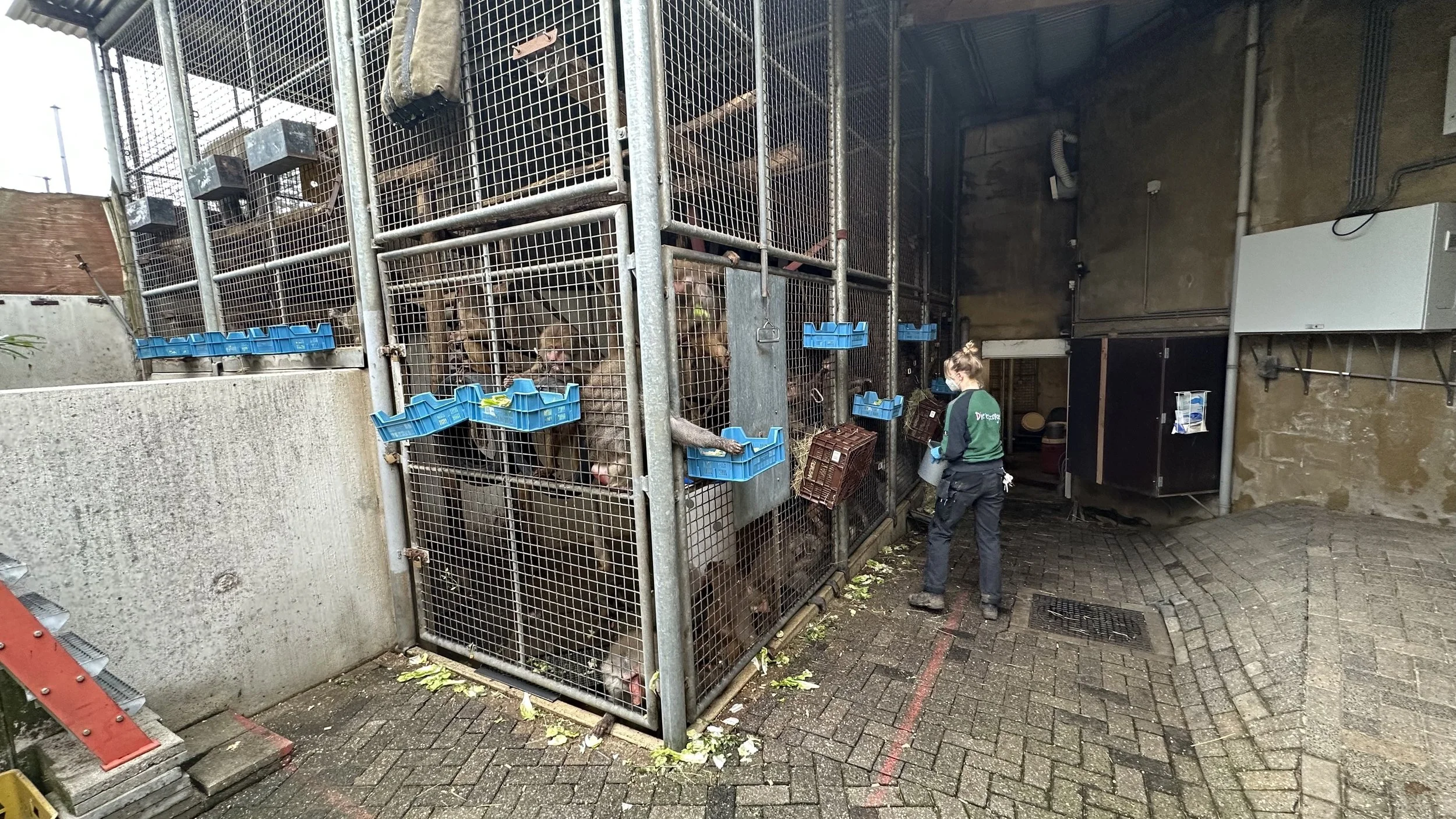
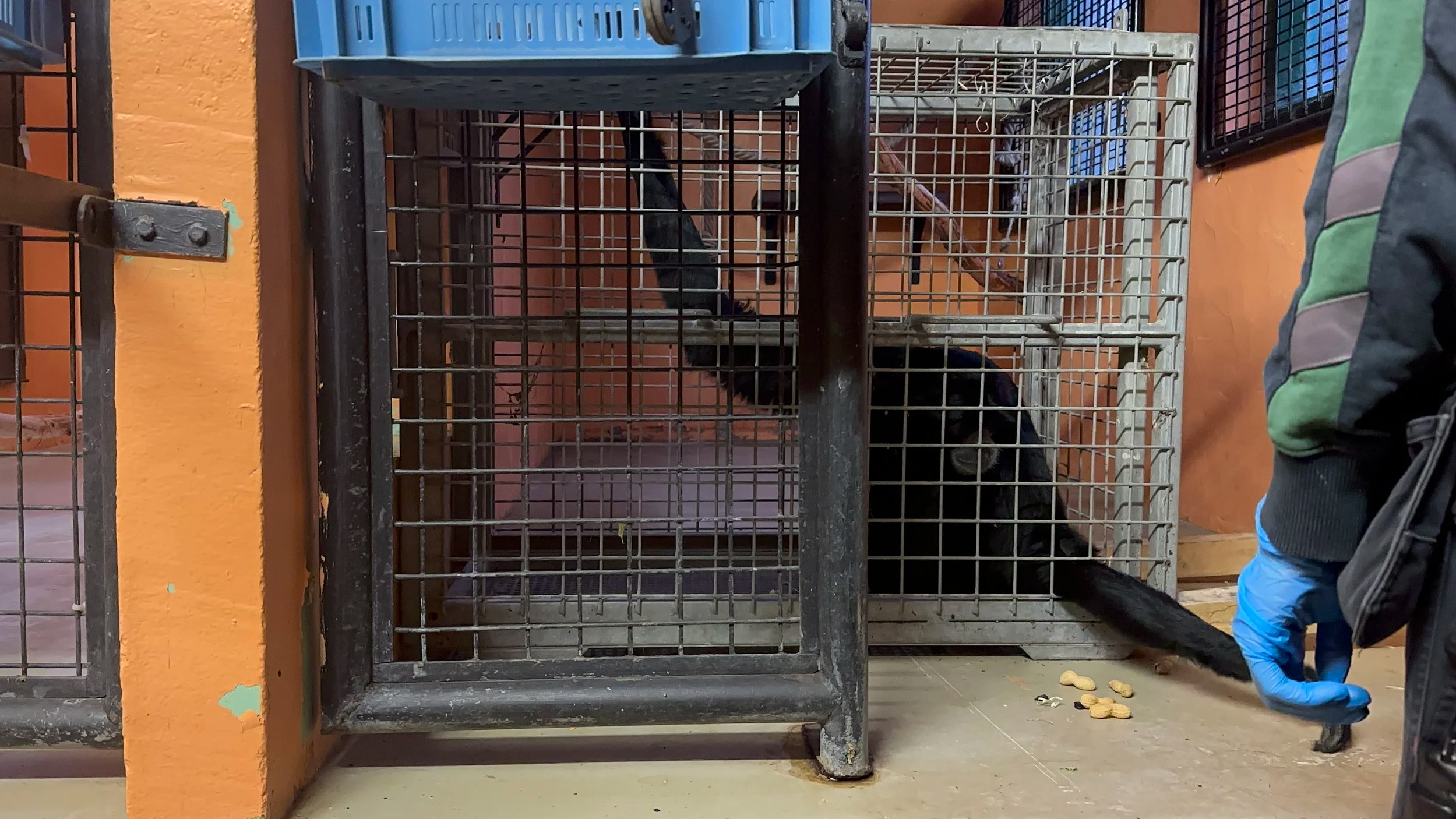
I went inside. The gate closed. I was stuck.
And if we repeat that experience often enough, we should not be surprised when the animal starts making different choices.
Next time, they hesitate.
So we add more food.
Then they stop at the doorway.
So we hide the trainer.
Maybe someone stands behind the bush with a rope.
Maybe we put even better food further inside.
Maybe we wait until the animal is distracted and quickly close the gate and because the animal becomes more suspicious, we become more creative.
The animal gets better at avoiding the gate.
We get better at tricking the animal.
The animal becomes more suspicious of the trainers.
We develop even more elaborate strategies.
And eventually, simply seeing a trainer approaching the habitat can become enough for the animal to move away.
At that point, people often say:
"This animal is difficult to shift."
But is the animal really the problem?
Or have we spent months teaching them that being shifted comes with consequences they don't want?
Shifting becomes a bigger problem
This is where things can get interesting. The animal gets better at avoiding the gate. The trainers get better at tricking the animal. The animal gets even better at avoiding the trainers. The trainers invent an even better trick.
But there is a better way!
For an animal to move willingly between two areas, both areas need to have value from the animal's perspective. We want the animal to see both locations as safe, predictable and reinforcing.
There are several ways we can influence this.
1. Enrichment
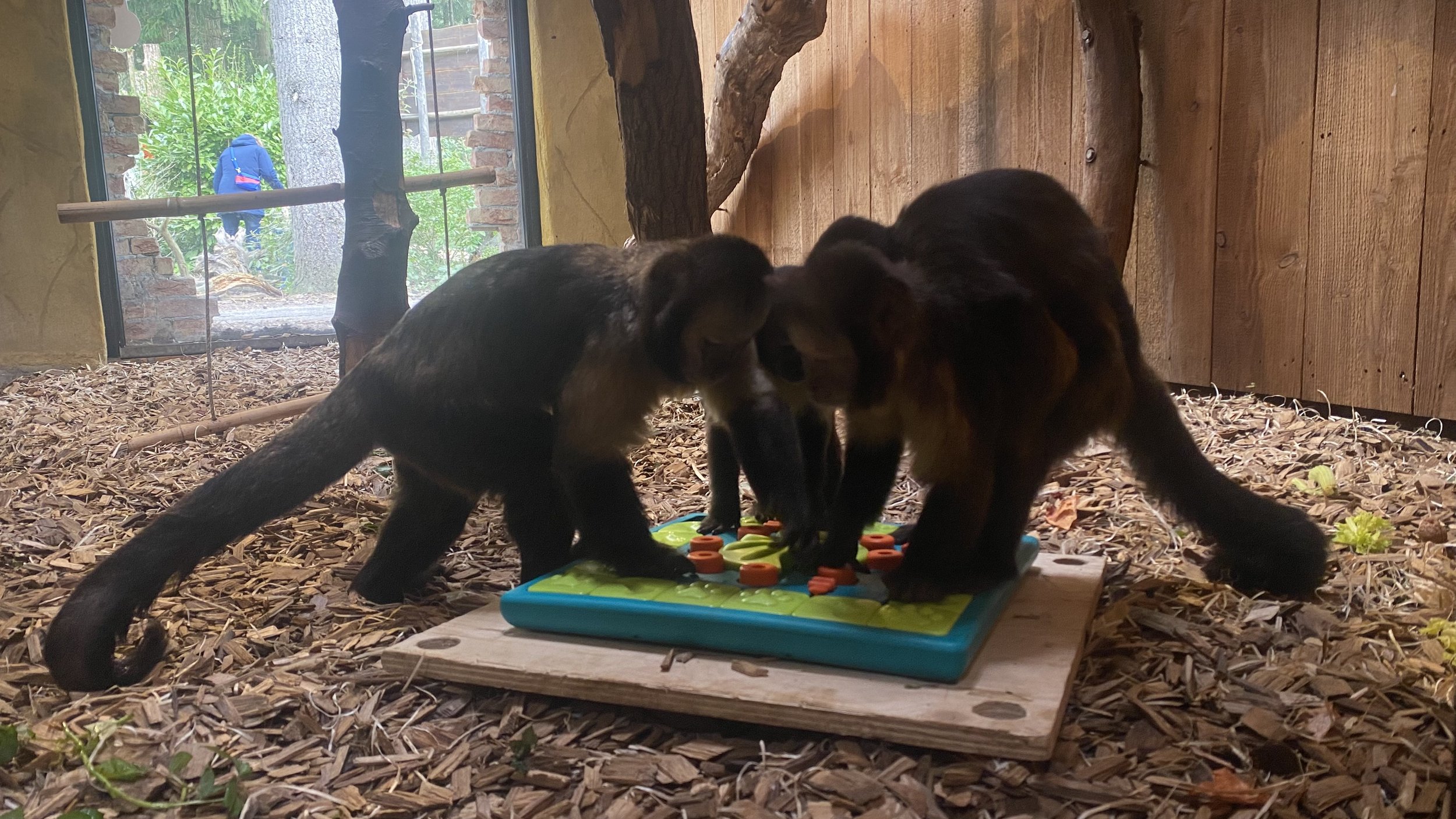
Enrichment can be a powerful reinforcer.
When we provide an enrichment device, food puzzle or other rewarding experience in a particular area, the animal can begin to associate that location with positive experiences through associative learning.
Over time, the area itself can become more valuable.
This means we can use enrichment strategically to help animals develop positive associations with spaces they may otherwise be reluctant to enter.
2. Enclosure design
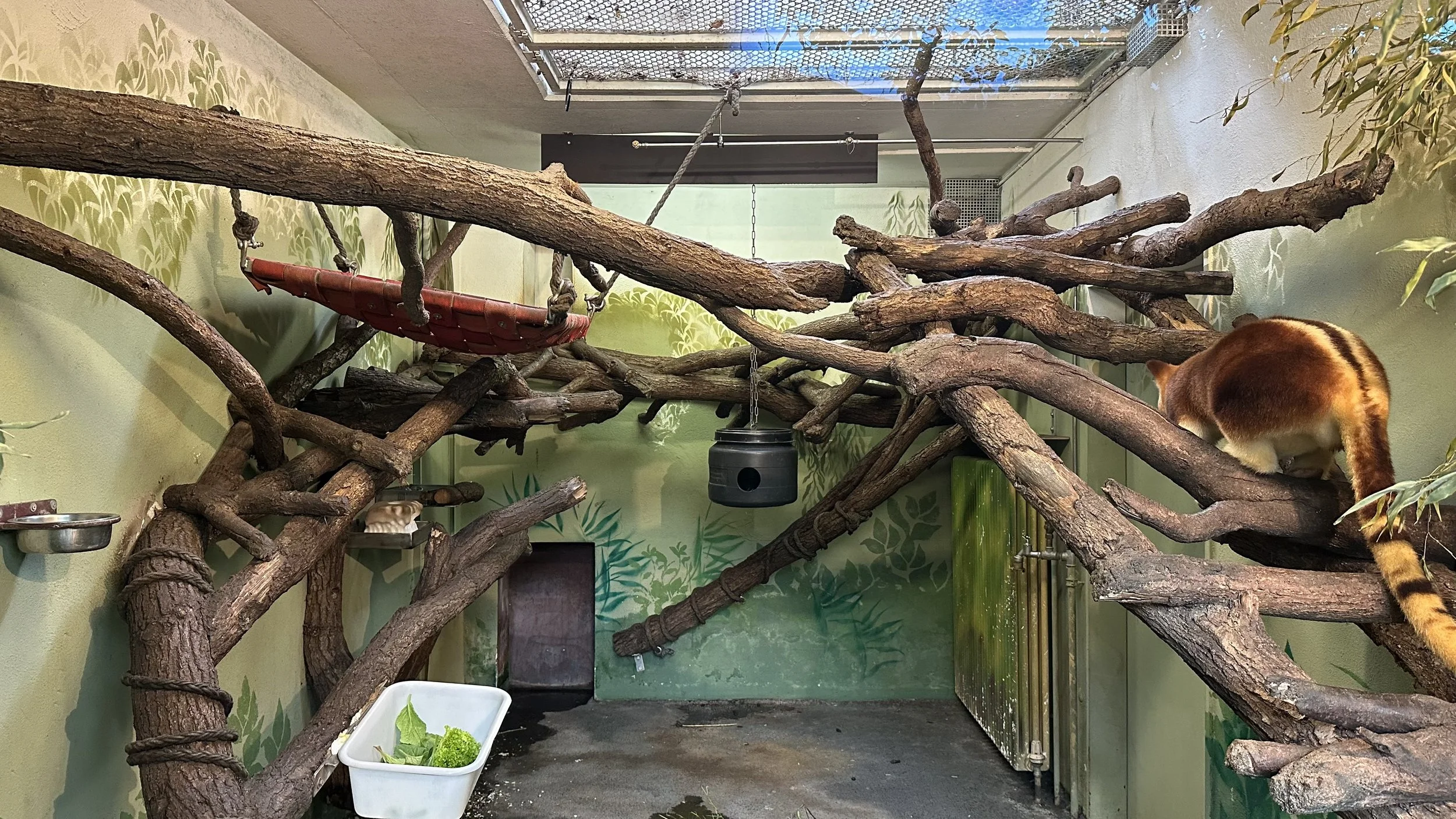
Consider the difference between an indoor and an outdoor enclosure.
Sometimes the indoor area can feel more like a dungeon that the animal is expected to enter rather than a place they would actually choose to spend time in.
Substrate, bedding, climbing structures, hiding places, natural features and other environmental elements can all influence how attractive an enclosure is.
If we make an indoor area more engaging and comfortable, animals may begin choosing to spend time there voluntarily.
And voluntary choice makes gating much easier.
3. Reinforcement Percentages
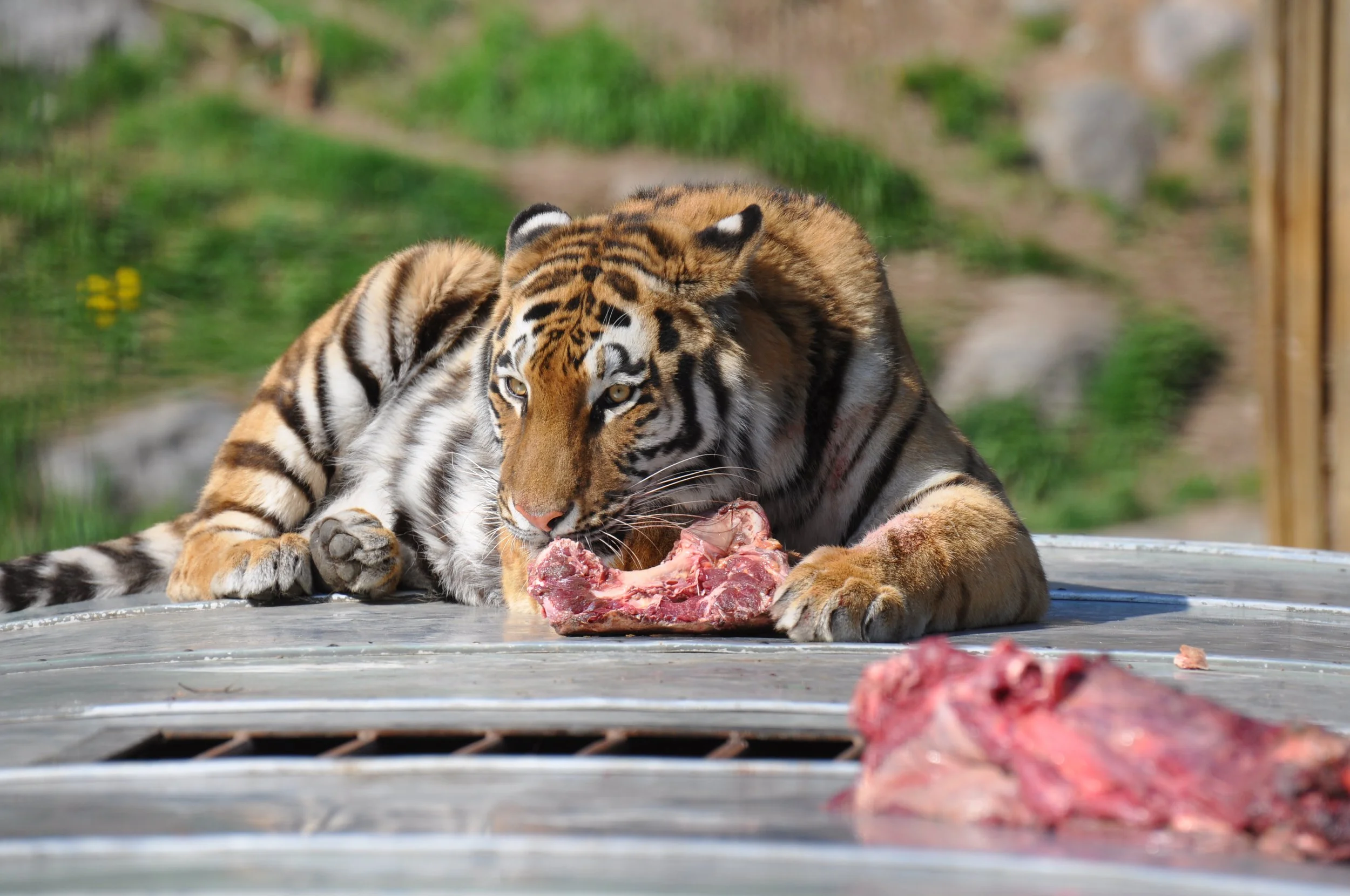
Another factor we often overlook is where we deliver reinforcement.
f an animal receives 80% of its food outdoors, why would we expect it to enthusiastically move indoors?
Likewise, if most reinforcement happens indoors, the animal may be much more motivated to return there.
The distribution of reinforcement matters.
When we consciously consider where reinforcement is delivered, we can influence the value of different areas and make future shifts much easier.
Understanding these three factors — enrichment, enclosure design and reinforcement distribution — can dramatically improve gating.
But there is another important piece of the puzzle.
Don't Be Better at Tricking. Be Better at Teaching.
The goal shouldn't be to become so clever that the animal doesn't notice what we're doing. This will actually make our relationship or trust account worse.
The goal should be to teach the animal exactly what is going to happen and make that behaviour worth choosing.
We want an animal that walks into an enclosure knowing that the gate may close and when the gate closes, their response isn't:
"Oh no. I've been tricked."
It should be:
"Okay. What happens next?"
That is a completely different training outcome and it requires us to stop asking:
"How can I get this animal inside?"
and start asking:
"How can I teach this animal to want to go inside?"
That change in thinking is where good gating begins.
This version makes the central provocation “the trick works, but what did you actually teach?” and turns the trainer into part of the learning loop rather than blaming the animal.
So, what can we do differently?
First of all, we need to think about how we want this behaviour to look in the future, in other words what is the criteria of the gating behaviour?
Animal training is all about looking at the situation from the animal's point of view through the science of behaviour. This creates an objective view to what we want the animal to achieve because we train for the future.
Gating could be moving to a transport box as well. This is the exact same situation as teaching animals to move to another enclosure.
We don't just want the animal to go into another enclosure once. We want to teach the animal that it is okay to move to another enclosure and that a gate closes afterwards whenever we ask the behaviour. This can be 10 times a day or just once a week. That means we need to teach the behaviour gradually through small approximations to create the succes we look for.
Small steps, big results
Initially, we might ask the animal to enter the enclosure and reinforce them.
Once that is going well, we can gradually increase the difficulty.
Enter the enclosure.
Enter and stay for a moment.
Enter the enclosure while the trainer moves toward the gate.
Enter the enclosure and wait until the gate moves.
Enter the enclosure and wait until the gate closes.
Then reinforce.
The exact steps will depend on the individual animal, their history the species and the situation.
The important part is that we gradually increase the criteria rather than suddenly going from:
"Please walk inside."
to
"SURPRISE! YOU LIVE HERE NOW."
We want the animal to understand what behaviour leads to reinforcement. Through small approximations, we can build a strong and reliable gating behaviour. But there is one specific detail of this behaviour which is often forgotten.
Closing the gate isn't the end!
The real goal is not simply:
Animal inside + gate closed = job done.
We also need to teach the animal to remain calm and patient in the other enclosure, especially when that enclosure is smaller or less interesting than their main habitat.
Can they settle?
Can they engage with their environment?
Can they wait calmly?
Can they accept reinforcement?
These are important behaviours too. and this becomes much easier when we have already built a history of positive experiences around shifting. Moving an animal into another, larger or equally rewarding enclosure can then become a much easier process.
This means we have to teach the animal to be comfortable in other areas. As mentioned above we can do this in various ways. But most importantly we need to teach the answers to the questions above. We have to increase the animals motivation to be willing to go into the other enclosure and accept a gate being closed behind them.
Train for the future!
Good gating isn't about finding the cleverest trick. It is about teaching an animal that moving between spaces is safe, predictable and worthwhile. We want the animal to understand what we are asking and to have a reason to choose that behaviour.
Because ultimately, we don't want to be the trainers who are constantly asking:
"How can I get this animal through the gate?"
We want to be the trainers asking:
"How can I teach this animal to happily go through the gate?"
When we approach gating from this perspective, we can reduce the need for coercion and increasingly complicated management strategies while giving the animal more predictability and control.
That's a very different question and it leads to a very different kind of training.
At Zoospensefull, we often train animals to follow us and to move ahead of us. These behaviours can be incredibly useful tools for teaching voluntary movement and helping animals successfully navigate the gating process.
Because good gating isn't about being faster than the animal. It's about making sure the animal doesn't feel like it needs to be faster than you and want to work together to succeed as a team.
To help you succeed, we have created complete training plans that you can find in our membership areas, Pathfinder and Animal Whisperer.