
How Animal Welfare Science Doesn't Reach Its Goal
It was 2018 when I was invited to speak as a keynote at a conference in Australia, my very first time down under. Far from Europe, but what a beautiful place. The conference focused on animal behaviour and its modification, featuring keynote speakers alongside animal trainers presenting their cases. What stood out most was the opening speech by Dr. Jenny Gray, who also wrote Zoo Ethics, a must-read.
In her speech, she noted that over 400 scientific papers on animal welfare are published every single month. As impressive as that sounds, it's also alarming. Let me explain why.
“The animal welfare field is evolving rapidly, but the question is whether our facilities are keeping pace. The answer, more often than not, is no.”
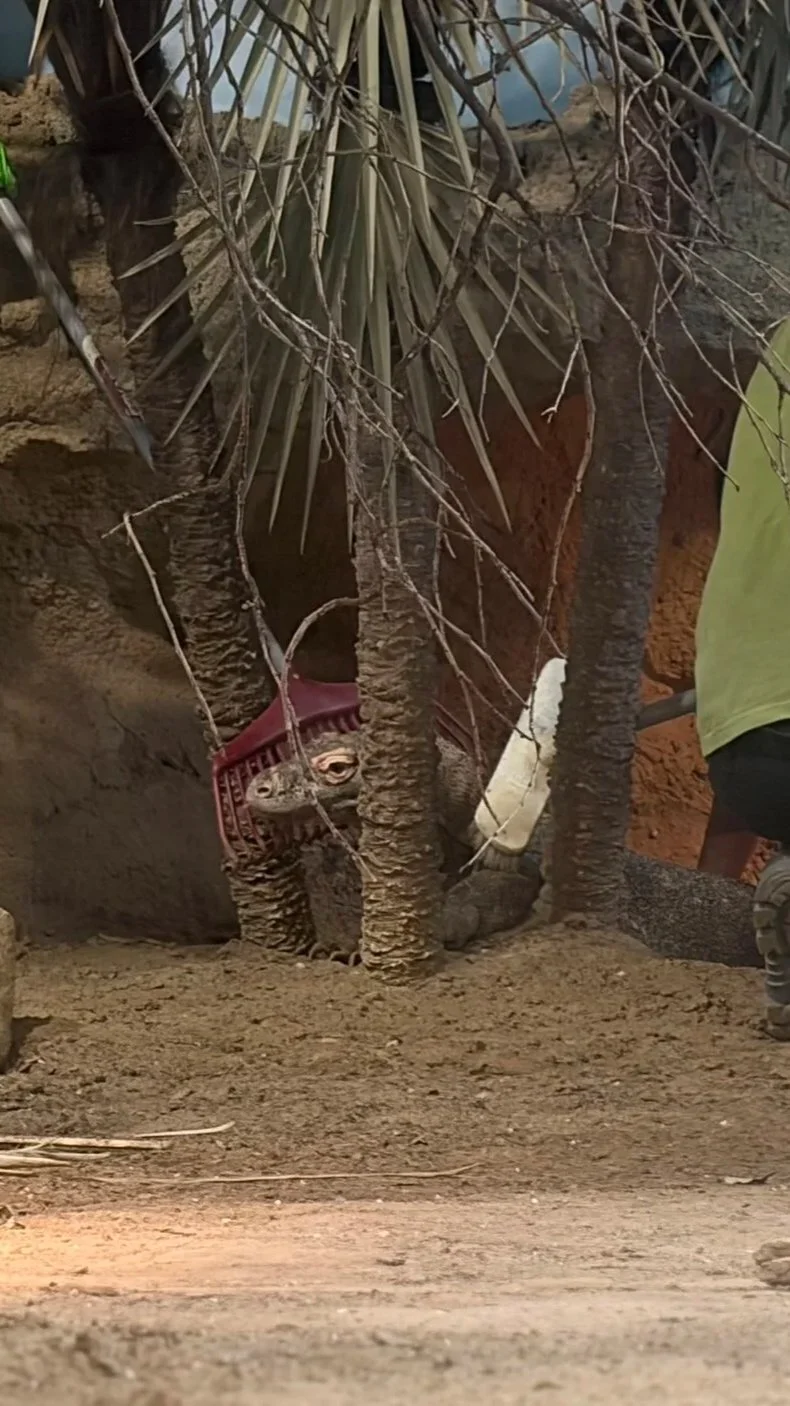
A Komodo Experience
Zoological facilities in particular frequently fail to keep their knowledge current, let alone their staff. We tend to optimise tasks for our own efficiency without thinking about the impact on the animals themselves. Take a recent example: I visited a facility where they needed to ultrasound a Komodo dragon. As anyone who works with them knows, Komodo dragons are not animals you want to get bitten by, and that tail is a weapon in itself. The keepers and veterinarian entered the exhibit armed with a large wooden shield, a rake, and a cleaning brush, used to keep the dragon's head away from the vet during the procedure.
I understand the logic. What interests me is the aftermath.
That same broom used during the Komodo dragon procedure is also used to clean the exhibit daily. Through associative learning, the animal now connects it with a stressful, threatening experience. The result? Every time a broom enters the exhibit, the dragon goes on the offensive. Now keepers have to move the dragon to another location before cleaning, a transition that is often forced rather than trained. The behavioural problems and negative associations keep stacking up.
We create our own long term problems.
This is likely a practice that's been in place for years, with no one stopping to ask whether there's a better way. Whether that's a gap in knowledge, habit, or both is hard to say. But what we consistently see is that quick, force-based procedures tend to create long-term problems, to the point where animals show stress responses the moment their caregivers appear. We have, inadvertently, made ourselves a trigger.
Managing hoof-stock comes with similar welfare challenges.
The same pattern plays out with hoofstock. One of the biggest challenges arises when we receive animals from another facility. We don't know their history or how they've been handled, which makes it difficult to interpret stress responses when they appear.
Consider this scenario: a moose is fed every morning at 9am. Then its health becomes a concern, and the veterinarian and management agree it needs to be darted. A reasonable decision but then they choose to do it at feeding time, at 9am, simply because the animal will be close and darting will be easier.
The short-term convenience comes at a serious cost. The animal now avoids feeding time entirely. It runs from keepers and can no longer be properly cared for, no nutritional monitoring, no body condition checks, a chronically stressed animal in its exhibit. What started as a medical intervention has created a welfare problem that may be worse than the original one, with knock-on effects for the entire social group.
Are common practices out of date?
It is common practice to chase, dart, and catch animals within our facilities. But what we are maintaining is poor welfare of our own making. Animals should feel comfortable in their own home, not spend their days wondering whether an animal care professional might show up at any moment to catch, dart, or chase them while it is actually feeding time.
Within the Five Domains framework, we talk a great deal about the fifth domain: the animal's mental state. This can be affected by many factors, nutrition, exhibit design, and more, but one of the most significant is how the animal perceives its environment. Is it a safe place? Can the animal find refuge within its exhibit? And what happens when we are the reason it needs to?
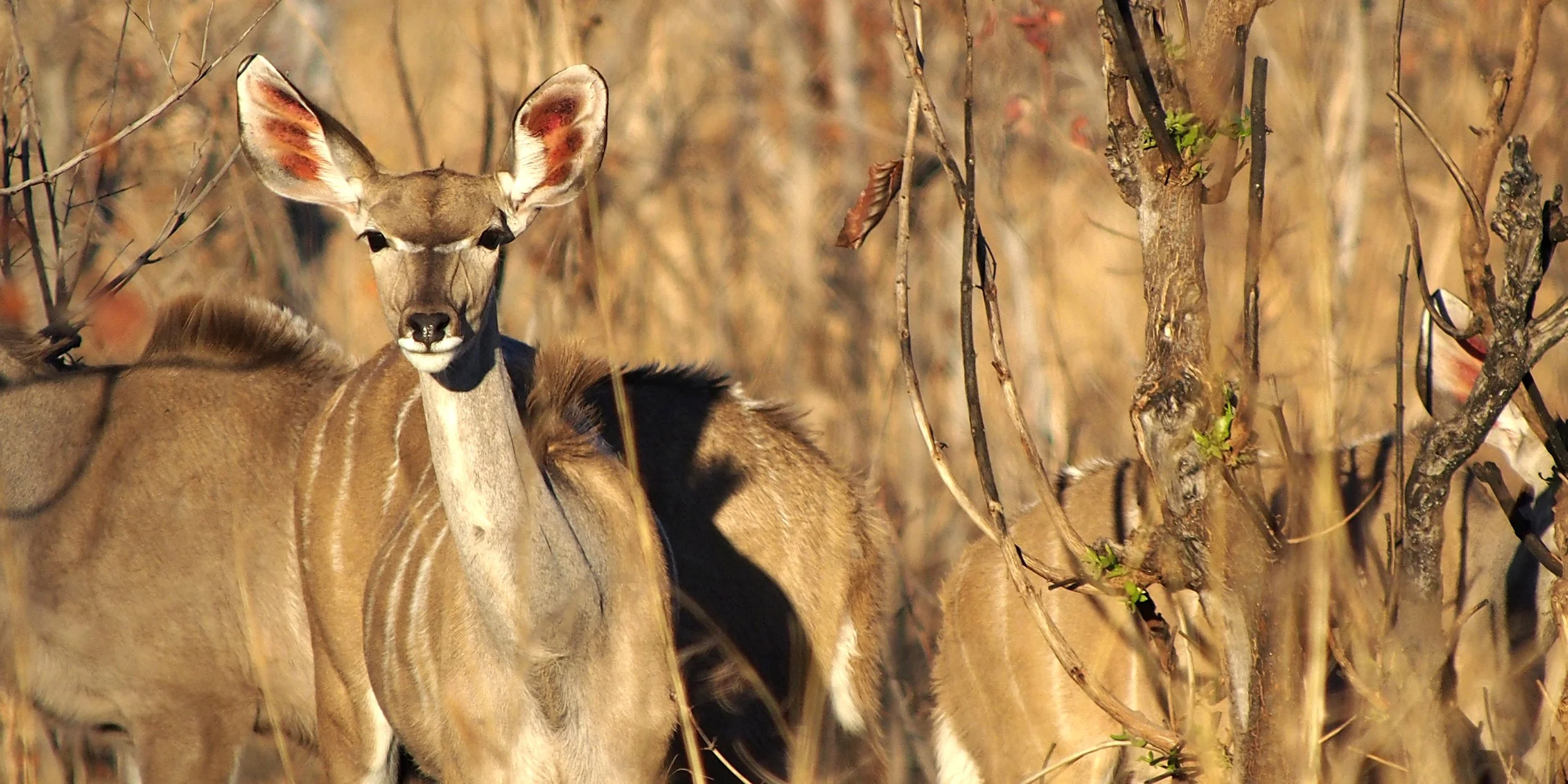
Antelopes camouflage and environment allows these animals to feel more safe in their environment.
There are solutions to these situations, but that's not the point of this article. The point is this: the welfare science being published every month is not reaching the practical side of animal care. Facilities can claim they conduct extensive welfare research and assessments, and many do, but if those findings aren't applied in practice, you're putting a bandage over a deeper problem.
It is about the theory translated in to simple practical applications.
To be clear: welfare research matters and must continue. The missing piece is translation, how do we apply findings in practice through low-cost, accessible systems that genuinely improve animal lives? That's what we focus on in our workshops. We take a holistic approach, starting with meeting the animal's core needs, not because it sounds good, but because it bridges the gap between theory and practice.
If we know a European brown bear spends roughly 50% of its day foraging, the solution isn't complicated: stop using bowls and scatter food throughout the exhibit instead. Hide it under dirt, tuck it into bushes, make the bear work for it. Suddenly the bear is using its energy the way nature intended, not begging, pacing, or developing problem behaviours.
The challenge facing our facilities isn't a lack of science. It's a lack of systems to keep animal care professionals connected to what we actually know about welfare today or should an animal care professional do this all themselves in their own time?
I often ask whether our passion for the animals in our care shows up in cuddles, pats and treats, or in a deeper commitment to understanding species-specific needs and continually improving husbandry to meet behavioural requirements. Both approaches have merits and limitations, but what’s clear is that we’re failing to translate essential information into the day-to-day practical care animals need in human care.
Need Help?
Need help turning your animal care team into strong welfare practitioners? Get in touch and we'll discuss a tailored programme for your facility.