
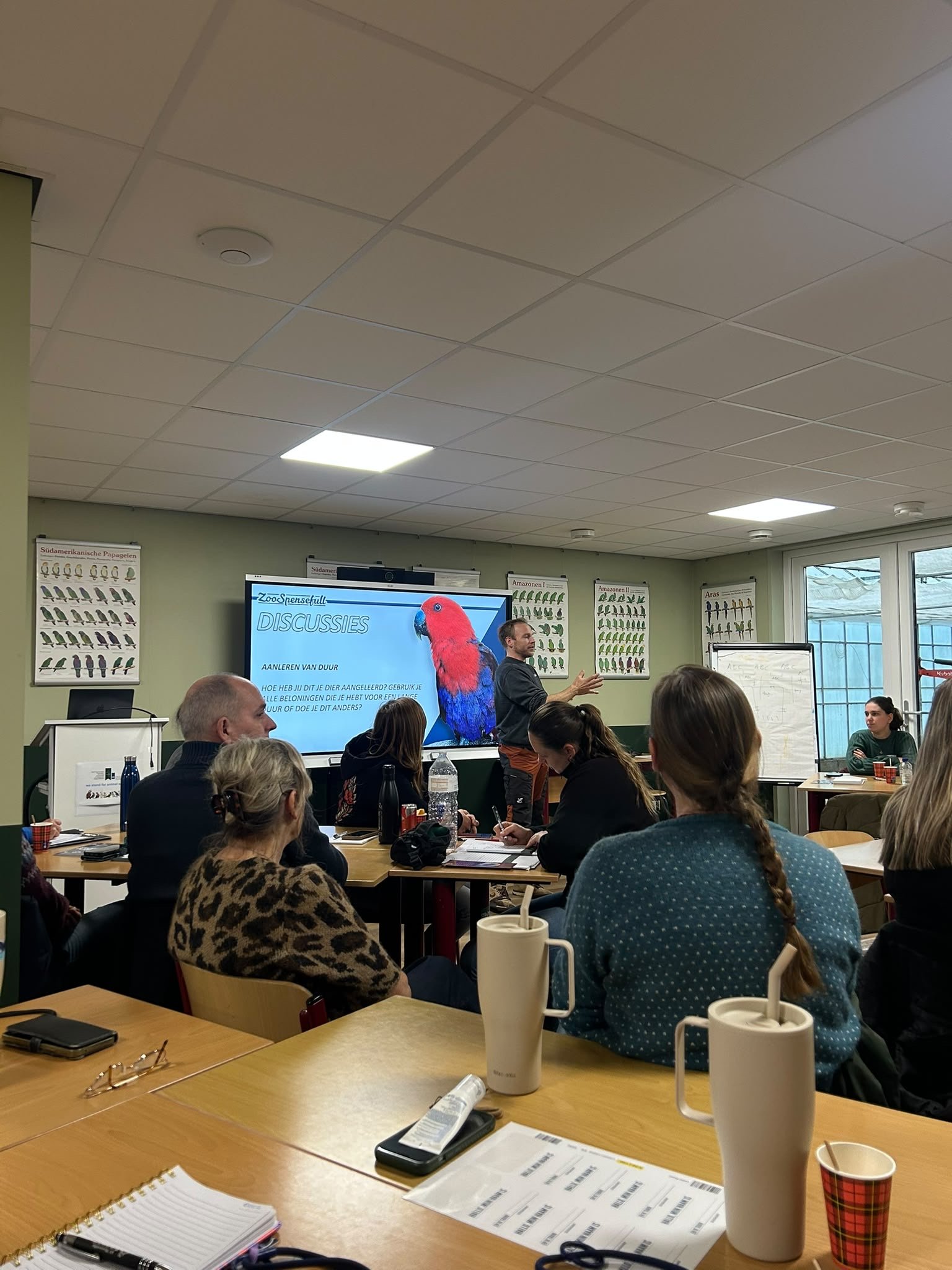
Over the last couple of months, I've delivered several workshops, presentations and online sessions. Interestingly, they all had something in common: when I asked trainers to create a particular behaviour, many found it surprisingly difficult. But perhaps I've been asking the wrong question.Because creating behaviour isn't actually difficult. In fact, we do it all the time, often without even realising it. The real challenge is creating the behaviour we want to see.And that's where things get interesting.
Start by asking the right question.
Whenever I work with students or coach trainers, I always start with one simple question:
"What behaviour would you like to see?”
You might think this is an easy question, but the answers often surprise me. Trainers are usually very good at telling me what they don't want. They don't want the animal to jump, vocalise, push, grab, move away or become frustrated. But when I turn the question around and ask what they actually do want, things become much more difficult.
Sometimes I hear answers like:
"She just needs to calm down.”
Or:
"How difficult can it be to get the animal to lie down?”
But these aren't training goals. They're wishes. What does calm actually look like? What does the animal need to do? What small actions would eventually lead to the behaviour we're hoping to achieve? This is where we need to change our thinking.
Behaviour doesn't just happen. We create it.
Creating behaviour can be incredibly simple. You see an animal do something you like, you reinforce it, and there's a good chance you'll see it again. That's behaviour creation in its simplest form.
We create habits, routines and patterns throughout the day. Animals are excellent at recognising these patterns and learning what tends to happen next. Think about anticipatory behaviour. An animal might start showing excitement because it predicts that food, enrichment, training or another positive experience is about to happen. Why? Because somewhere along the way, we've created a relationship between certain events and what follows.The interesting part is that we often create these behaviours without even being aware of it.
So, if we're already creating behaviour every day, why do we find it so difficult when we deliberately want to train something new?
I believe the answer lies in our ability to break behaviour down into manageable steps.
Stop looking at the finished behaviour
During one of my sessions, I showed a group of trainers how a polar bear had been trained to lie on its side.Someone immediately asked me:
"But how do you train something like that when there's a barrier between you?”
My response was, "Well, luckily there's a barrier in between!" That got a laugh from the audience. But then I turned the question back to them.
"How would you do it?”
And that's when things became interesting. For many trainers, thinking through the individual steps needed to create a behaviour is much more challenging than watching the finished behaviour. So, I started helping them break it down. What if we introduced a target to the paw? What if we introduced another target near the head? Could we gradually change the position of those targets and reinforce the smallest movements towards the animal lying on its side?
Suddenly, the behaviour didn't seem quite so complicated. Instead of trying to train the entire behaviour, we were creating a series of smaller behaviours that could eventually lead to our goal. One step at a time. Afterwards, someone asked me:
"Peter, how do you come up with these ideas so easily?”
The honest answer? Years of developing training plans, observing animals and learning to dissect behaviour into smaller components.It's a skill that develops with experience, but more importantly, it's a skill that every trainer can improve.
The power of training plans
This is exactly why I put so much emphasis on training plans. A good training plan doesn't simply tell you what behaviour you want to achieve. It helps you identify all the opportunities along the way to reinforce the animal. Think about it. If your goal is a complicated behaviour, how many small movements could you reinforce before you get there? A shift in weight. A head movement. A paw movement. A change in body position. Each of these could become an opportunity to reinforce progress.And there isn't necessarily just one way to reach your goal. There may be several different approaches, depending on the animal, the environment and the behaviour you're trying to create.
I'm particularly interested in creating strong, reliable behaviours, which is why I always come back to one fundamental concept:
Action and reaction. Behaviour followed by consequence.
The animal does something, and something happens as a result. This teaches the animal that its actions matter. What we ask the animal to do is up to us as trainers, but there's one important condition: we need to give the animal a very high likelihood of success. And that doesn't happen by accident.
The environment is part of the training
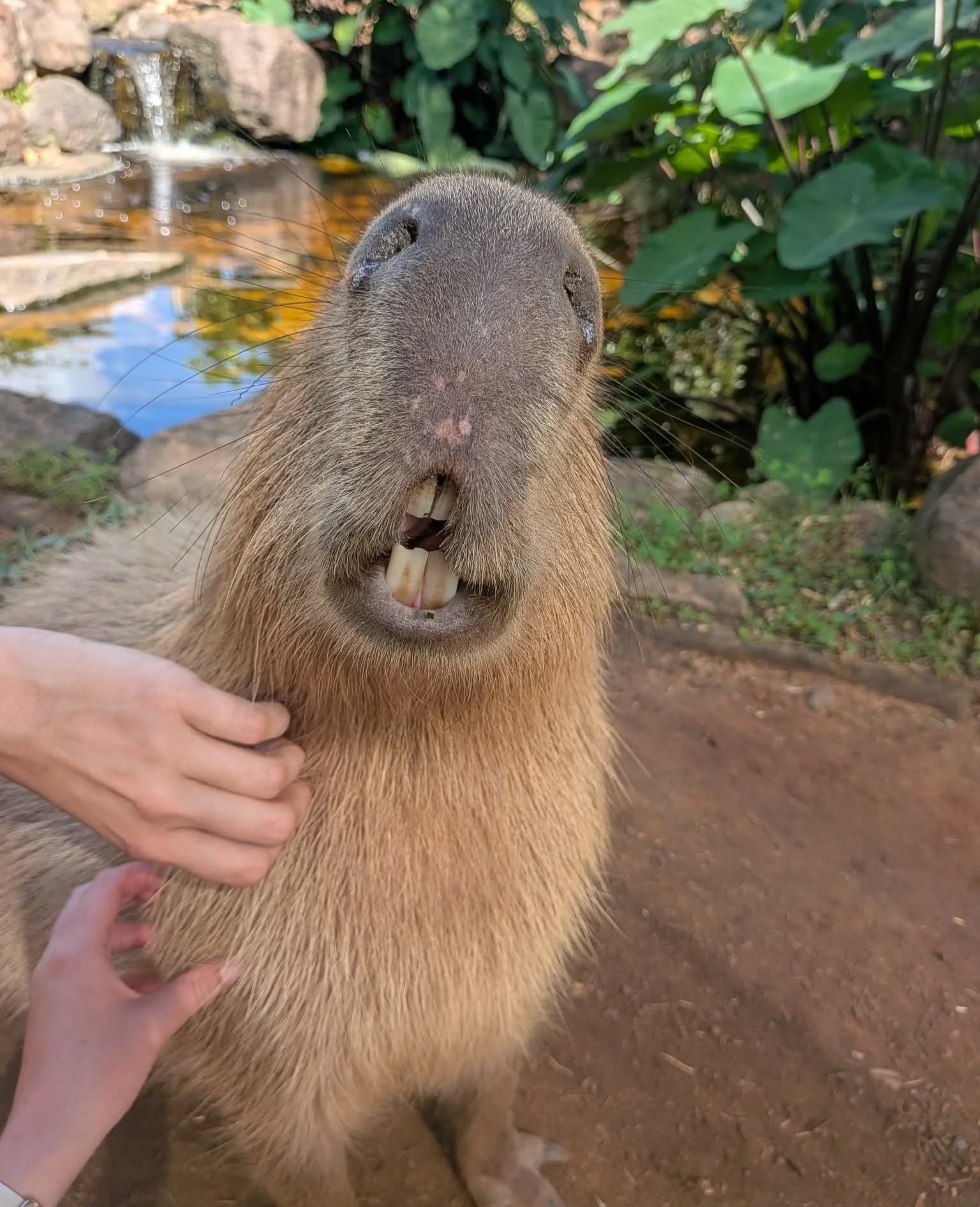
Successful training starts long before the training session begins. It requires preparation, observation and an understanding of the environment in which the animal is expected to perform. Animals respond to changes in their surroundings. This is something we can use to our advantage. If we arrange the environment in a way that makes the behaviour we want easier to perform, we're already halfway towards achieving our goal.
Sometimes the best training decision isn't asking the animal to do something differently. It's changing something in the environment so that the desired behaviour becomes more likely to happen. Yet this is an area where I often see trainers struggle. Particularly in zoos, where daily routines are busy and time is limited, we can easily rush through training sessions. We have other responsibilities, other animals to care for and other tasks waiting for us.But rushing often comes at a cost.
We become less observant, less focused and less likely to recognise opportunities to reinforce useful behaviour. We don't always take the time to adjust the environment or rethink our training plan. And ironically, by trying to save time during the training session, we can make the journey towards our goal much longer.
Perhaps we need to look at ourselves first
One thing I've learned over the years is that animal training involves a great deal of self-reflection. When an animal doesn't perform the behaviour we're looking for, our first reaction should not automatically be to ask why the animal isn't doing it.
Perhaps we should ask ourselves a few questions first.
Did we break the behaviour down into small enough steps?
Did we create enough opportunities for success?
Was the environment prepared correctly?
Did we reinforce the right responses?
And most importantly, did we make it easy enough for the animal to understand what we were asking?
We cannot expect animals to consistently perform behaviours when we haven't done the preparation needed to make those behaviours achievable.
Creating behaviour isn't difficult. Creating the right conditions for behaviour to happen is where the real skill lies.
So, the next time you find yourself saying, "Why won't this animal do what I'm asking?", take a step back. Perhaps the question shouldn't be what the animal needs to do differently. Perhaps it's time to ask what you could do differently.
Because good training doesn't start with asking more from the animal. It starts with becoming a better trainer.
Thank you.